
blog
The Conference is Dead. Long Live the Room.
7 Jun 2026 · 4 min read
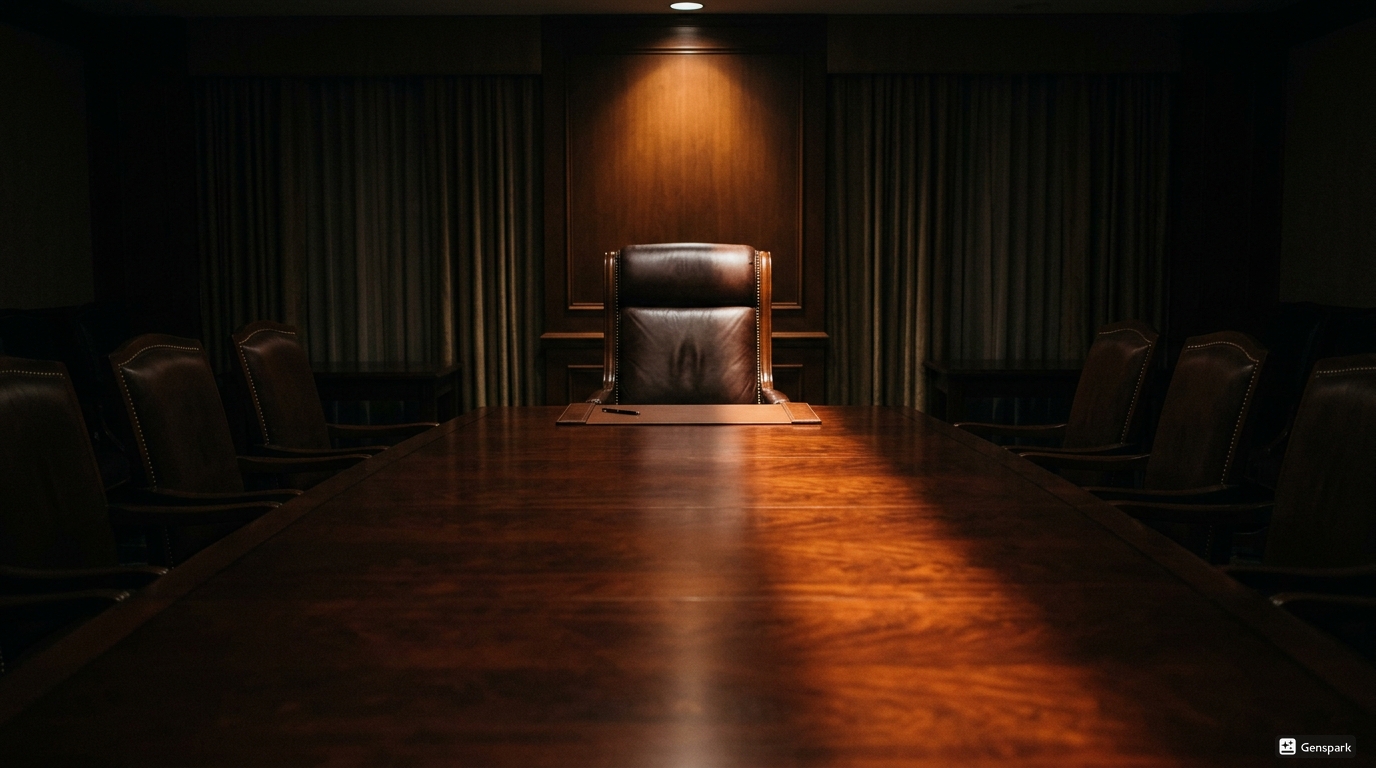
Every year, thousands of leaders spend two days in a convention centre, collect forty-seven business cards, and return to their desks unchanged. We built The High Table because we believe that is a scandal.
There is a certain ritual to the modern executive conference. You register six months in advance. You arrive at a hotel ballroom dressed in the language of importance — lanyards, branded tote bags, a programme booklet thicker than most novels. A speaker you have seen on three other stages tells you about disruption. You nod. You network in the coffee queue. You fly home.
And nothing moves.
This is not an accident. It is the product of an industry optimised for the appearance of exchange rather than exchange itself. The conference economy is built on volume — more attendees, more sponsors, more keynotes — because volume is measurable and depth is not. The result is a format that services the ego of the institution while starving the intellect of the individual.
The conversations that actually change things happen after the panel, in the corridor, over a late dinner, when the cameras are off and the titles stop mattering.
I. The Problem with Scale
The most consequential conversations of our careers have never happened on stage. They happen in the margins — at the side of the room, over a meal that runs long, in the thirty minutes before an early flight when two people decide to simply be honest with each other.
Scale destroys this. When you put four hundred people in a room, you do not get four hundred voices. You get a broadcast. The loudest, most polished, most politically safe perspective rises to the podium, and the rest retreat into polite attention. The provocative question goes unasked. The genuine disagreement stays private. The room performs consensus it does not feel.
India's new economy is being built by a generation of leaders navigating terrain that has no precedent and no playbook. They are making decisions at speed, with incomplete information, inside organisations that are simultaneously too young to have institutional memory and too large to move easily. They are lonely in ways they cannot say out loud, because the loneliness of leadership is one of its least discussed conditions.
They do not need another panel. They need a room.
II. What We Mean by a Room
A room, in the sense we mean, is not a location. It is a condition. It requires three things: the right people, the right constraints, and the right temperature.
The right people are not necessarily the most senior. They are the ones who have skin in the question — who are living the problem, not theorising about it. Seniority is a proxy for experience, but experience concentrated in a narrow domain is often less generative than experience spread across multiple ones. A room of generals rarely produces the most creative strategy. A room of generals and the people closest to the ground does.
The right constraints mean smallness. Twelve people around a table will say things that twelve people in a room of two hundred will not. The social mathematics of intimacy operate differently. When you can be seen — truly seen — the incentive to perform collapses. What remains is thinking.
The right temperature means enough psychological safety to disagree and enough intellectual friction to make agreement meaningful. This is harder to manufacture than it sounds. It requires curation, context, and someone willing to hold the room rather than merely chair it.
We are not building an event company. We are building infrastructure for the conversations that determine the direction of things.
III. Our Wager
The High Table is a wager on a particular belief: that the quality of thinking among India's senior leadership is not the constraint. The constraint is access to context — to the perspectives, the pattern recognition, the unfiltered experience of peers who have stood in the same room and faced the same ceiling.
We are building something deliberately small, deliberately private, and deliberately slow. There will be no livestreams, no post-event decks, no thought leadership content packaged for LinkedIn. What happens in the room stays useful in the room — which means it stays honest.
Our members are founders, CXOs, and decision-makers who have earned the right to be in rooms where the real conversation is happening, and who are no longer willing to spend their most limited resource — time — in rooms where it is not.
If you have sat in a conference and felt the strange deflation of an afternoon that promised much and delivered little, you already understand what we are building.
The conference is dead. The room is eternal. We are here to keep it lit.